Music Publicist Q&A: How to Build Your DJ Contact List
Getting your music heard by the right DJs can make or break your promotional efforts. A targeted DJ contact list ensures your tracks land with professionals who can amplify them to real audiences. Here’s what matters most:
- Focus on Quality Over Quantity: Start with 10–25 DJs who align closely with your genre. Smaller tastemakers are often easier to reach and more likely to engage.
- Research Before Contacting: Use tools like 1001Tracklists and social platforms to verify DJs’ styles and contact details.
- Personalized Outreach: Craft short, specific emails tailored to each DJ’s preferences and recent activity. Avoid generic mass emails.
- Organize Your List: Track not just emails but also preferences, past interactions, and feedback using tools like spreadsheets or CRMs.
- Build Relationships: Follow up politely, thank DJs for support, and maintain long-term connections with exclusive promos or social engagement.
Key takeaway: A well-curated, actively managed list is more impactful than blasting hundreds of irrelevant contacts. Treat DJs as collaborators, not just recipients, and you’ll see better results.
Record labels, here’s how to run DJ and Radio Promo in-house in 2024
sbb-itb-888513b
Defining Your DJ Target List
Before you start gathering names and email addresses, it’s important to figure out exactly who should be on your list. Without clear criteria, your list won’t serve any real purpose.
Which DJs Should Be on Your List?
The ideal DJ for your list isn’t necessarily the most famous one – it’s the one who fits your music best. For instance, does the DJ actually play your specific subgenre? A tech house DJ and a melodic techno DJ may both fall under the electronic music umbrella, but their audiences and styles are completely different. Tools like 1001Tracklists can help you see what a DJ is currently playing before you make contact.
In addition to genre alignment, think about the DJ’s position in the industry. Resident DJs at local venues, mid-level touring artists, or hosts of niche radio shows are often more approachable – and more relevant – than globally recognized stars. Plus, they’re more likely to actually listen to what you send.
Big-Name DJs vs. Smaller Tastemakers
While it’s tempting to aim for top-tier DJs, keep in mind that they’re inundated with submissions – often hundreds or even thousands of tracks every week. Many rely on trusted sources like well-known labels or promo pools to filter what they hear.
Smaller tastemakers, however, offer distinct advantages: they’re easier to reach, more likely to match your genre, and can help you build meaningful connections. Getting support from 10 respected DJs within your subgenre can create real social proof in the industry. This kind of credibility can be a game-changer when pitching to bigger labels later on. As OBSCUUR puts it:
"One DJ who genuinely champions your music is worth more than a thousand indifferent downloads." – OBSCUUR
How Many DJs Should You Start With?
The short answer: fewer than you might think. Instead of casting a wide net, focus on a list of 10–25 highly targeted DJs. Mass emailing 200 semi-relevant contacts won’t get you far. For context, tech house labels alone receive over 1,000 demo submissions per month, with acceptance rates hovering around 3–5%. Smaller, niche labels often have lower submission volumes and higher acceptance rates – sometimes 2 to 3 times higher.
A smaller, focused list also makes your outreach manageable. You can personalize each message, keep track of responses, and build genuine relationships. These are things you simply can’t do when you’re sending hundreds of cold emails at once. Start small, analyze your results, and expand strategically.
With your target list in place, the next step is learning how to efficiently find and verify these contacts.
Finding and Verifying DJ Contacts
Where to Find DJs Who Accept Promos
Social media platforms like Instagram, TikTok, and Threads are excellent starting points. DJs often share set videos, tracklists, and genre-specific content, giving you a snapshot of what they’re currently spinning. Festival lineups and event pages are also goldmines, offering lists of active DJs categorized by genre and market level.
For a more organized approach, check out booking marketplaces like GigSalad. These platforms feature professional DJs actively seeking work, making them easy to reach. Bandcamp is another overlooked option, especially for connecting with independent DJs and artists who maintain a direct relationship with their audience and might welcome exclusive promos. Once you’ve identified potential DJs, it’s essential to verify their details to ensure your outreach hits the mark.
How to Verify Contact Information
After spotting a DJ, take time to confirm their contact details by comparing information across platforms like Facebook, Instagram, and official websites. This cross-checking helps you verify the most up-to-date promo address.
To ensure your promos align with their style, use resources like 1001Tracklists. As Leonardo Fiamenghi Lauretti from Abstrakt Music Lab emphasizes:
"If you keep on sending irrelevant promos to DJs, you’ll likely end up in their spam box, so checking if what you’re sending to these DJs is still what they are playing is crucial."
You can also send a direct Instagram message to the DJ or their management team to confirm the preferred contact address. Be mindful of the type of email you find – a dedicated [email protected] address is a strong signal they’re open to submissions. On the other hand, a general management inbox might require you to ask for permission first. Once verified, approach DJs in ways that respect their preferences.
Avoiding Spam and Respecting DJ Preferences
Even with verified contacts, respecting how DJs prefer to receive music is key to building a good relationship. Sending generic mass emails can backfire, as they’re often ignored or flagged. Considering that at least 27% of global email traffic consists of spam and phishing attempts, it’s no surprise that DJs are cautious about unsolicited files.
Only reach out to DJs who have publicly stated they accept promos, whether through a promo-specific email, a submission form, or a direct conversation. Always include an easy way for them to opt out of future emails, and ensure your outreach complies with CAN-SPAM and CCPA regulations. A short, personalized message that references their recent work will resonate far better than a generic email blast – and it’s far less likely to end up in the spam folder.
Organizing and Managing Your DJ Contact List
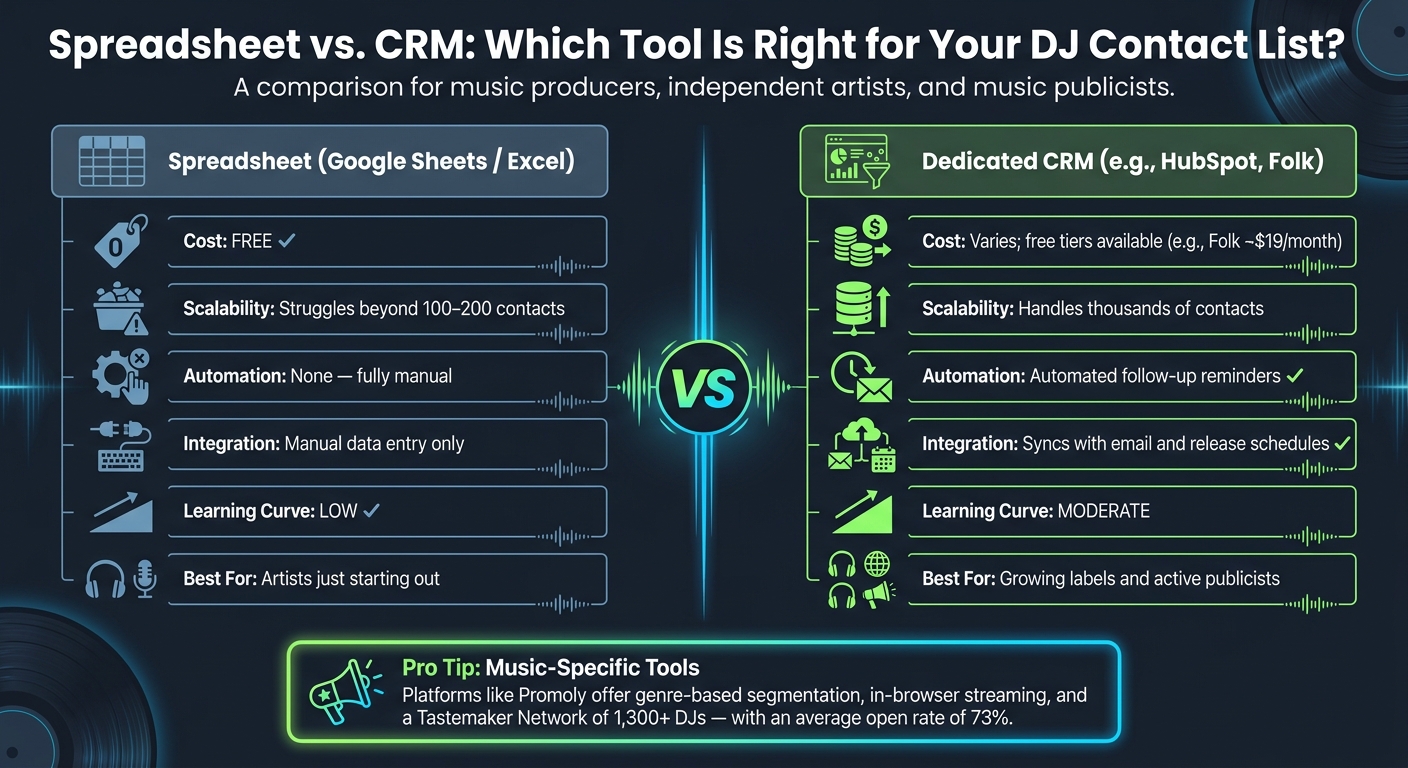
Spreadsheet vs. CRM for DJ Contact Management
Once you’ve confirmed accurate contact information, the next step is organizing it in a way that makes your outreach both effective and personal.
What Information Should You Store?
Having just an email address isn’t enough.
"An email address on its own is almost useless. A good promo list includes notes." – Promoly
Your list should go beyond basics like name, email, and social handles. Include genre preferences, mood tags, preferred audio formats (like WAV, MP3, or streaming links), and a detailed history of your interactions: what you pitched, when, and how they responded. Keeping track of these details helps you craft outreach that feels personal rather than automated. For example, noting that someone "prefers vinyl rips" or "loves analog synths" can make your next email stand out.
To build meaningful relationships, log new contacts within 24 hours of meeting them. After a hectic festival or conference, details can quickly slip your mind, so acting promptly ensures your notes are accurate and actionable.
Spreadsheet vs. CRM: Which Tool Should You Use?
If you’re just starting out, a simple Google Sheet might be all you need. It’s free, easy to use, and requires no special skills. However, as your contact list grows past 100 to 200 names, manually managing everything becomes time-consuming. Here’s how spreadsheets compare to dedicated CRM tools:
| Feature | Spreadsheet (Google Sheets/Excel) | Dedicated CRM |
|---|---|---|
| Cost | Free | Varies; free tiers available |
| Scalability | Struggles with 100–200 contacts | Handles thousands of contacts |
| Automation | None; fully manual | Offers automated follow-up reminders |
| Integration | Manual data entry only | Syncs with email and release schedules |
| Learning Curve | Low | Moderate |
While general-purpose CRMs like HubSpot (with a free tier) or Folk (around $19/month) add features like email tracking and pipeline management, they’re not specifically designed for music promo campaigns. Still, as your needs grow, these tools can save time and keep your outreach organized.
How Promoly Can Help You Manage Your List
Promoly takes organization a step further by tailoring its platform specifically for music promotions. It enables genre-based segmentation and builds workflows around the needs of promo campaigns. Instead of just storing contacts, it focuses on engaging them. For example, its Tastemaker Network gives you access to over 1,300 DJs and media contacts, pre-sorted by genre. This ensures your deep house track doesn’t end up in a techno DJ’s inbox.
"The key difference between a generic email blast and a proper promo campaign is tracking." – Promoly
Promoly’s in-browser player allows DJs to stream tracks directly from their email, eliminating the hassle of downloads and encouraging higher engagement. It also supports multiple sender profiles, making it easy for publicists managing multiple artists or labels to keep analytics separate under one account. With an average open rate of 73% across campaigns, Promoly demonstrates how organized, targeted outreach can lead to better results than generic mass emails.
Outreach and Relationship Building With DJs
How to Write a Good Promo Email
With more than 120,000 tracks uploaded daily in 2026, your promo email needs to grab attention fast. Many emails fail because they’re too long, impersonal, or feel like they’ve been copy-pasted.
Tip: Use Instagram DMs for promos only if the DJ specifically requests it.
Keep your email short – 100–150 words max. Include essential details like the artist name, track title, genre, mood, BPM, key, and release date. DJs are busy, and a long-winded email is likely to be ignored. Your subject line should be clear and informative. For instance, "Support for your sets: [Track Name] (Deep House) – 124 BPM" works much better than something vague or overly clever.
Personalization is key to making your email stand out. Mention a recent set or radio show the DJ played and explain how your track fits into their style. For example, say something like, "This track would work perfectly for a peak-time 1–2am slot." Avoid sending irrelevant promos – it’s a quick way to end up in their spam folder. Always double-check that your track aligns with what they’re currently playing.
Important: Never CC multiple DJs in the same email and never send unfinished tracks.
Once you’ve nailed the email, the next step is following up.
When and How to Follow Up
Following up is an essential part of building a connection, but timing and tone matter. A good follow-up ensures your music stays on their radar without becoming intrusive.
Wait one week after sending your initial promo before following up. Keep it polite and professional – one reminder is enough unless you have a specific reason to reach out again.
"A follow-up should add value, not pressure." – allaboutmusicbusiness.com
The best follow-ups include updates that add context, like early support from a notable DJ, a chart milestone, or an approaching release date. If a DJ hasn’t opened your email after a week, send one polite nudge and then move on. Often, silence is due to a busy inbox, not outright rejection.
| Follow-up Stage | Timing | Content Guidelines |
|---|---|---|
| Initial Follow-up | 1 week after promo | Check in politely; confirm they received the link |
| Value-Add Update | When milestones occur | Share news like early support or release reminders |
| Post-Support Thank-You | After a track is played | Express gratitude and offer early access to future tracks |
| Relationship Maintenance | Monthly | Share their sets or send music tailored to their style |
Turning DJs Into Long-Term Supporters
Building a lasting relationship with DJs goes beyond the initial email and follow-up. Personalized outreach can lead to response rates of 30% or more, compared to the 3–5% typical of generic mass emails.
When a DJ plays your track, thank them immediately and share the moment on social media. Tagging the DJ and the venue not only shows your appreciation but also strengthens the connection. Over time, deepen the relationship by sharing their mixes on your social channels, attending their gigs, or even sending them tracks from other artists that align with their sound. This shows that you value their taste, not just your own releases.
"The labels that build long-term support are the ones that treat DJs like collaborators, not just contacts." – MN2S
Offering exclusive access is another great way to build loyalty. Sending a trusted DJ an unreleased "white label" track or early stems for remixing gives them something unique – and gestures like this go much further than a generic mass email ever could.
Conclusion: Building a DJ Network That Lasts
A well-organized DJ contact list isn’t just a collection of names – it’s an asset that gains value with every release. When managed effectively, it minimizes the need for cold outreach and helps foster meaningful connections. The secret? Quality over quantity. A tight-knit network of 50 engaged DJs will always outshine a massive list of 500 who’ve lost interest.
In today’s competitive music scene, trust is everything. Consistent, thoughtful, and respectful communication lays the groundwork for DJs to anticipate your releases – even before you reach out.
The process is simple but impactful: focus on your genre, confirm contact details, and track essential information with a reliable tool. Treat DJs as collaborators, not just entries in a database. Regularly review your list – every six months is a good rule of thumb – to keep it fresh and aligned with current trends.
"Industry connections are business assets, not popularity contests." – SubmitLink
Start small, stay consistent, and watch your network grow through authentic relationships.
FAQs
What’s the fastest way to find DJs who actually play my subgenre?
The fastest way to discover DJs who align with your subgenre is by leveraging tools that analyze playlists and artist support. Platforms like RadioPromo.io or PlaylistOwl allow you to search by artist, genre, or specific keywords to pinpoint DJs based on their track history. Another great resource is 1001tracklists, where you can identify DJs supporting tracks similar to yours. Prioritize reaching out to local and mid-level DJs – they’re often more accessible and receptive to fresh music.
How do I ask a DJ for their correct promo email without sounding pushy?
Be concise and professional when reaching out. Start by checking their social media bios, website, or radio show descriptions for a listed email. If you can’t find one, send a polite message through social media asking for their preferred promotional contact. Briefly explain how your music aligns with their style, keeping your message short. If they don’t reply, avoid following up multiple times.
What should I send instead of an attachment to avoid spam filters?
Instead of sending an MP3 or ZIP file as an attachment, opt for a clean external listening link, like a private streaming link. This makes it easier for DJs to access the track on both desktop and mobile devices. Plus, large attachments can trigger spam filters or overcrowd inboxes. Keeping your email lightweight improves the chances of it being delivered successfully.